 Tess M.
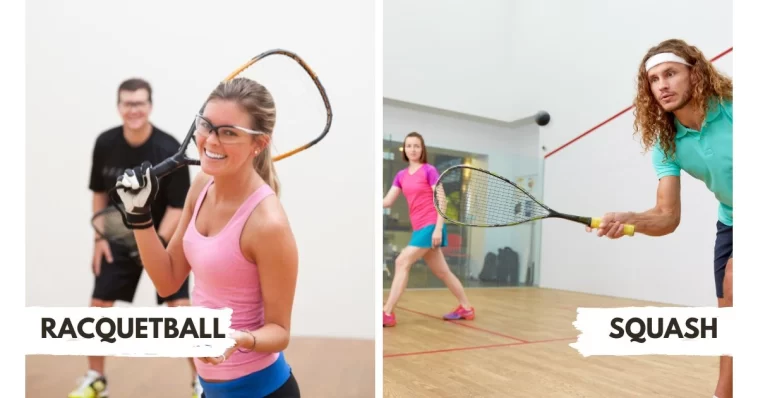
A rubber ball flying at speeds that would make most people duck. If you’ve ever stood at the gym wondering whether to grab a racquetball racquet or a squash racket, you are not alone. Both racquetball and squash look similar on the surface, but once you step inside that four-walled court, the differences become very clear. This guide breaks down everything from court size and scoring to gear recommendations and fitness benefits so that you can make an informed decision. Whether you’re drawn to racquetball vs squash for its raw speed, accessibility, strategy, or global reach, this comparison will help you choose the right sport for your fitness goals.
What Is Racquetball?
Racquetball was created in 1950 by American athlete Joe Sobek, who combined elements from handball, tennis, and squash into a new sport he originally called “paddle rackets.” The name later changed to racquetball, and the sport grew into one of the most popular indoor activities in North America. Today, millions of people play racquetball in gyms and sports clubs across the United States and Canada, and it has a solid international following through the International Racquetball Federation.
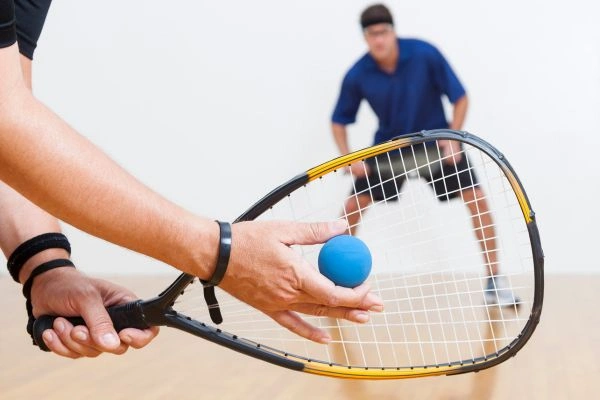
The game is played in a fully enclosed court where all four walls, the ceiling, and the floor are in play after the serve. Players use a short racquet (no longer than 22 inches) to hit a hollow rubber ball against the front wall, trying to keep the ball alive while making it as difficult as possible for the opponent to return. The ball is large, bouncy, and fast, which makes for long, exciting rallies full of unpredictable angles.
Key Racquetball Facts at a Glance
- Court size: 40 feet long by 20 feet wide by 20 feet high
- Ball diameter: 2.25 inches (57mm), hollow rubber, very bouncy
- Racquet length: Up to 22 inches, with a wider head compared to squash
- Scoring: Games played to 15 points; only the server scores; best of 3 games
- Ceiling: In play after the serve (and during rallies)
- Governing body: International Racquetball Federation (IRF)
- Popularity: Primarily North America, with a growing international presence
What Is Squash?
Squash is significantly older, tracing back to the 1830s when students at Harrow School in London discovered that a punctured rubber ball would “squash” against the wall and bounce back with interesting pace and spin. The sport spread quickly, gaining popularity through the British military and reaching over 185 countries worldwide, with an estimated 20 million regular players.
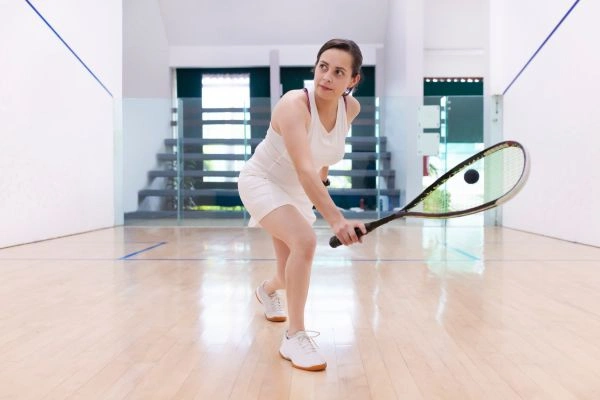
Squash uses a smaller, narrower racket (up to 27 inches long) to hit a smaller, less bouncy ball against the front wall of a court. The ceiling is strictly out of bounds, and the walls have marked boundary lines that define legal play. Unlike racquetball, both players can score a point on any rally, regardless of who is serving. Squash is widely regarded as one of the most physically demanding sports in the world, combining intense cardio, quick reflexes, and high-level tactical awareness.
Key Squash Facts at a Glance
- Court size: 32 feet long by 21 feet wide by 18.5 feet high
- Ball diameter: 1.5 to 1.6 inches (39.5 to 40.5mm), less bouncy than racquetball
- Racket length: Up to 27 inches, narrower head than racquetball racquets
- Scoring: Games to 11 points; any player scores per rally (PAR scoring); best of 5 games
- Ceiling: Out of bounds at all times
- Governing body: World Squash Federation (WSF), with 185 member countries
- Popularity: Truly global, especially strong in Asia, Europe, and Egypt
Racquetball vs Squash: A Side-by-Side Comparison
Both sports look alike from the outside, but the differences in court rules, equipment, and playing style create completely different experiences inside that enclosed room. Here is a direct comparison of the two across the most important categories.
Court and Playing Environment
The court is where the two sports diverge most noticeably. Racquetball courts are larger overall, and the ceiling is in play, which dramatically changes how the game flows. Players can use ceiling shots defensively to push opponents to the back of the court or change the pace of a rally. With all surfaces in play, there is far more freedom and variety in shot selection, and the game feels open and aggressive.
Squash courts are slightly shorter and lower, and strict boundary lines on every wall define where the ball must land. Hitting the ceiling is always a fault. This smaller, more restricted playing area places a premium on precision and placement over power. Every shot must stay within boundaries, which is what gives squash its reputation as a game of angles and intelligence rather than brute athleticism.
| Feature | Racquetball | Squash |
|---|---|---|
| Court Length | 40 feet | 32 feet |
| Court Width | 20 feet | 21 feet |
| Ceiling in Play | Yes (after serve) | No |
| Ball Size | Larger (57mm) | Smaller (40mm) |
| Racquet Length | Max 22 inches | Max 27 inches |
| Scoring | Server only scores, to 15 | Any player scores, to 11 |
| Games per Match | Best of 3 | Best of 5 |
| Services per Point | Two allowed | One allowed |
Ball and Speed
The racquetball is noticeably bigger and bouncier. It flies off the walls and the floor with a lively, unpredictable energy that keeps rallies fast and reactive. Because the ball stays alive longer and bounces higher, beginners find it easier to make contact and keep the ball in play from the start.
The squash ball is smaller, harder to hit, and requires a warm-up period before it bounces consistently. Different colored dots on the ball indicate how bouncy it is, from the double yellow dot (least bouncy, used by advanced players) to the blue dot (most bouncy, used by beginners). The reduced bounce forces players to generate their own power and to move much more quickly to reach the ball before it dies on the floor.
Rules and Scoring
Racquetball uses side-out scoring, meaning only the serving player can win a point. If the rally goes against the server, the serve changes hands without a point being scored. This system makes games feel longer and creates exciting momentum swings as players fight for the serve.
Squash uses PAR (point-a-rally) scoring, which means either player can score on any rally. Games are scored more quickly, but the best-of-five match format means a squash match can last a very long time at the competitive level.
Fitness Benefits: Which Sport Works You Harder?
Both sports deliver a serious full-body workout. They engage the legs, arms, core, and cardiovascular system simultaneously, and neither requires you to be a seasoned athlete to start getting real fitness benefits. That said, there are some differences in intensity worth knowing about.
Racquetball Fitness Benefits
Playing racquetball burns 600 to 800 calories per hour, making it an excellent workout for weight loss and muscle building. The constant movement required during a racquetball match improves cardiovascular endurance, hand-eye coordination, and explosive power. Because the ball moves quickly from every angle, the body must constantly react and adjust, thereby sharpening reflexes and mental focus.
Key physical benefits of regular racquetball play include:
- Calorie burn: 600 to 800 calories per hour, depending on intensity
- Cardiovascular health: Constant movement keeps heart rate elevated for the full session
- Muscle strength: Engages legs, core, arms, and shoulders through every rally
- Balance and coordination: Requires constant lateral movement and spatial awareness
- Agility and reflexes: Fast, unpredictable ball improves reaction time significantly
- Bone density: Weight-bearing movement builds stronger bones over time
- Stress relief: Fast-paced gameplay demands focus, which creates a mental break from daily stress
Squash Fitness Benefits
Squash is consistently ranked among the most physically demanding sports in the world. The smaller court means players cover ground faster, and the lower-bouncing ball demands explosive, low-to-the-ground movement that heavily taxes the legs and core. Competitive squash can burn over 900 calories per hour for heavier players, slightly outpacing racquetball at the highest intensity levels. For anyone who wants a truly grueling workout disguised as a sport, squash is hard to beat.
Key physical benefits of squash include:
- High calorie burn: Competitive squash reaches 900-plus calories per hour at peak intensity
- Endurance building: Long five-game matches build significant aerobic capacity
- Leg strength: Constant low crouching and explosive lunges build powerful legs
- Tactical mental workout: Strategic thinking and pattern recognition sharpen mental agility
- Full-body engagement: Arms, shoulders, core, and legs all fire consistently throughout play
- Flexibility: The low, dynamic movements improve hip and ankle flexibility over time
Racquetball Gear: What You Need to Play
Getting started with racquetball does not require a huge investment. The basic kit is straightforward, and most items are widely available at sporting goods stores or online. Here is what every new racquetball player needs.
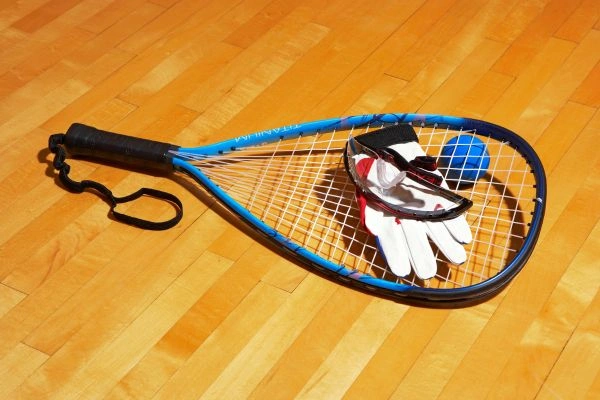
Racquetball Racquets
The racquet is the most important piece of racquetball equipment. Beginners should look for something lightweight with a forgiving sweet spot, while intermediate and advanced players can dial in power and control to their specific style.
Top racquetball racquet brands and models include:
- Head Black Widow / Scorpion / Cobra Series: A trusted entry-level to mid-range lineup from one of the most established names in racquet sports. The 160g, 170g, and 180g versions suit different player preferences.
- Ektelon Inferno Pro: Ektelon has been making racquetball equipment since 1964 and remains one of the top names in the sport. The Inferno Pro uses O-port technology to reduce aerodynamic drag and increase swing speed.
- Gearbox GB 50: A well-regarded beginner-to-intermediate option praised for solid control and comfortable feel at an accessible price point
- E-Force Bedlam: A versatile all-around performer at around $89 that works well across skill levels. Its vibration-dampening design makes it comfortable for longer sessions.
- Wilson Striker: A reliable, forgiving option for beginners and recreational players looking for something easy to pick up and play with from day one.
Racquetballs
The Ektelon Premium Select Blue is the gold standard for consistency and durability, offering a medium-speed pace that makes it the go-to choice for recreational and club play alike. Penn also makes widely available racquetballs that are popular at recreational clubs. For beginners, a medium-bounce ball is the best starting point.
Essential Accessories
- Protective eyewear: Strongly recommended and required in many clubs. A fast-moving rubber ball at close range is a serious eye hazard.
- Court shoes: Non-marking soles with good lateral support are essential. Look for court-specific footwear from ASICS, Skechers, or New Balance.
- Gloves: Racquetball gloves from Ektelon improve grip during sweaty matches.
- Racquet bag: A dedicated bag protects your racquet and keeps gear organized between sessions.
Squash Gear: What You Need to Play
Squash equipment offers a bit more range and nuance than racquetball gear, particularly in racket selection and ball choice. Here is what new squash players should know before buying.
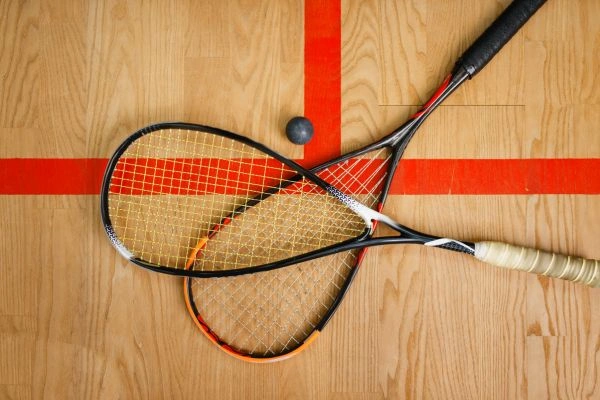
Squash Rackets
The squash racket market is competitive and very well-developed. These are the top brands and models across different budgets and skill levels:
- Tecnifibre Carboflex 125 Airshaft: The Tecnifibre Carboflex 125 Airshaft takes first place in squash racket rankings, impressing with its excellent combination of lightness and power. It is the benchmark all-rounder for serious club players and above.
- Tecnifibre Carboflex 125 X-Top V2: Considered the best overall squash racket for advanced players who want maximum power and precision. Uses innovative X-Top technology for enhanced aerodynamics and durability.
- Dunlop CX 125: The Dunlop CX 125 is the standout choice for players seeking absolute control, with a compact precision frame that rewards clean striking. Best for advanced players who win with placement and accuracy.
- HEAD Nano Ti 110: One of the lightest squash rackets available at just 110 grams, with a head-heavy balance that provides extra power. A strong all-around choice from beginner to advanced.
- Dunlop Sonic Lite Ti: The go-to recommendation for beginners and recreational players, offering excellent value with an easy-to-handle metal design and a large sweet spot via the Powermax extended stringbed.
- Perfly Speed 125: A genuine value option for players who want serious specs without the premium-brand price tag.
Squash Balls
Squash balls come in different bounce levels indicated by colored dots:
- Blue dot: Most bouncy, recommended for beginners
- Red dot: Medium bounce, good for intermediate players
- Single yellow dot: Less bounce, used by advanced club players
- Double yellow dot: Least bouncy, the official competition ball used at the pro level
For anyone just starting, a blue dot ball from Dunlop or Tecnifibre makes learning far more enjoyable, as it stays in play longer and gives players more time to develop their technique.
Essential Squash Accessories
- Protective eyewear: Mandatory at most clubs worldwide, especially for juniors
- Court shoes: Same principles as racquetball, lateral support is critical
- Grip tape: Karakal and Tecnifibre both make quality replacement grips
- Racket bag: Most brands offer matched bags for two to four rackets
Which Sport Is Easier to Learn?
For absolute beginners with no background in racquet sports, racquetball has a lower barrier to entry. The bigger, bouncier ball is easier to hit, the rules around where the ball can go are more forgiving, and a new player can experience satisfying, long rallies within their first few sessions. The learning curve for basic competency is gentle and the game rewards athleticism, instinct and skill.
Squash has a steeper learning curve. The smaller ball, the strict boundary lines, and the shorter, more abrupt bounce require more precise technique from the start. New squash players often spend several sessions just learning how to keep the ball consistently within bounds. However, the structured skill development pays off: squash players tend to develop excellent footwork, racket control, and court awareness that translate well to other racquet sports.
A Simple Guide: Which Sport Suits You?
Choose racquetball if you:
- Are new to racquet sports and want quick results
- Prefer a faster-paced, power-focused game
- Play primarily in North America, where courts are common
- Want a high-calorie burn without a long technical learning curve
- Enjoy unpredictable rallies with lots of angles and creative shot-making
Choose squash if you:
- Want a global sport with access to courts in almost any country
- Prefer a strategic, tactical game that rewards precision and patience
- Are motivated by a steeper challenge and deeper skill development
- Want the most physically demanding racquet sport available
- Play competitively and want access to a robust professional circuit
Where to Play: Finding Courts Near You
One practical factor that often decides which sport a new player tries first is court availability. In the United States, racquetball courts are common at large gym chains, YMCAs, and university recreation centers. However, the total number of dedicated courts has declined from its peak in the 1980s. Squash courts are more prevalent internationally, and many U.S. racquetball courts have actually been converted to squash courts in recent years as the global demand for squash has grown.
Both sports are easy to find at multi-sport athletic clubs. If you are unsure what is available locally, most clubs that offer one also offer the other. Many also provide rental equipment for first-time players, so there is no need to buy gear before deciding which sport feels right.
Frequently Asked Questions
- What Is The Main Difference Between Racquetball And Squash?
Racquetball uses a larger, bouncier ball on a bigger court with the ceiling in play, where only the server can score. Squash has a smaller, less bouncy ball on a smaller court, with strict boundaries, and any player can score on each rally.
- Is Racquetball Easier To Learn Than Squash?
Yes, racquetball is easier for beginners due to the larger, bouncier ball and quicker rally pace. Squash has a steeper learning curve due to its smaller ball and precise footwork needed for control.
- What Racquetball Equipment Do Beginners Need?
Beginners need a lightweight racquet, a tube of racquetballs, protective eyewear, and court shoes with non-marking soles. The total cost for basic equipment typically ranges from $80 to $150.
- Can You Use A Racquetball Court For Squash?
No, racquetball courts lack the specific markings required for squash, such as boundary lines and the tin on the front wall. Squash courts must follow these rules and be used for competitive play.
- Which Sport Burns More Calories, Racquetball Or Squash?
Both sports burn a lot of calories, but squash burns slightly more, up to 900 calories per hour at peak intensity. Racquetball burns around 600 to 800 calories per hour, depending on intensity.
Which Racket Sport Is Right for You?
Both racquetball and squash offer exciting, fast-paced gameplay with their own unique characteristics. Racquetball is known for its high-speed, power-focused style and larger courts, making it a great choice for beginners who want quick results. On the other hand, squash challenges players with its tactical approach, smaller court, and stricter rules, rewarding precision and endurance.
Whether you’re drawn to racquetball’s accessible, energetic vibe or squash’s strategic and physically demanding nature, both sports provide great opportunities for fitness and socializing. By understanding the differences in equipment, rules, and play styles, you can make an informed decision that aligns with your fitness goals, preferences, and the experience you’re looking for. So grab your racquet and give one of these thrilling sports a try!